Tracing roulette's mechanical heritage through Britain's digital licensing framework
Clara Hayes · Sep 22, 2026
Tracing roulette's mechanical heritage through Britain's digital licensing framework
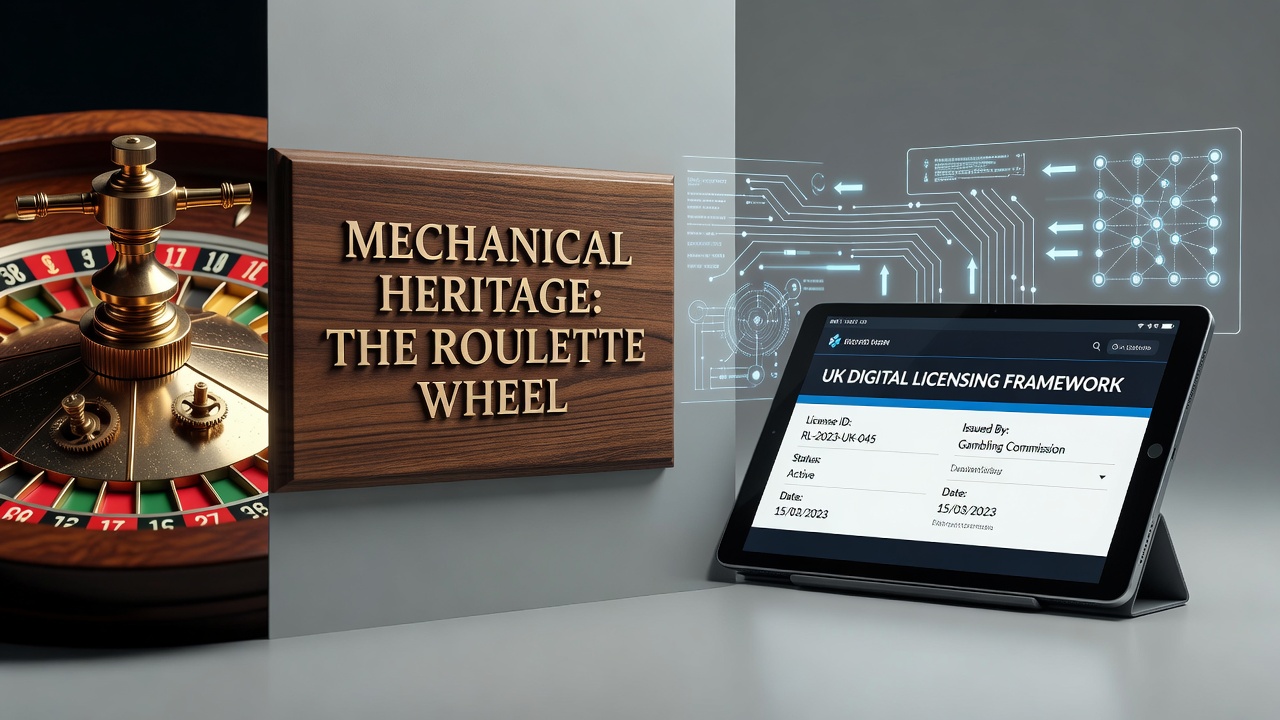
Britain's approach to digital roulette licensing builds directly on centuries of mechanical wheel design, where early French and British engineers established precise standards for balance, friction, and ball trajectory that continue to shape software certification today. The original roulette mechanism, refined in the late 18th century, relied on a rotating disk divided into 37 or 38 numbered pockets, a small ivory ball, and calibrated grooves that produced predictable yet random outcomes through physical laws of motion. Those same principles now inform the mathematical models embedded in licensed digital platforms operating under British regulatory oversight. Early mechanical wheels incorporated specific manufacturing tolerances, such as pocket depth uniformity and rotor weight distribution, to prevent bias. Licensing frameworks in Britain require digital equivalents to replicate these physical characteristics through certified algorithms and hardware simulations. Data from historical casino records show that 19th-century British establishments maintained inspection logs documenting wheel calibrations at regular intervals, a practice mirrored in contemporary digital testing protocols that verify simulation fidelity against mechanical benchmarks.From physical rotors to licensed algorithms
Engineers in Britain and across Europe documented how slight variations in wheel tilt or ball speed could influence landing probabilities, leading to standardized maintenance procedures by the early 1900s. Modern digital licensing incorporates these insights by mandating that random number generators undergo statistical audits matching the distribution patterns observed in well-maintained mechanical wheels. Observers note that September 2026 marks the scheduled rollout of updated simulation guidelines that explicitly reference historical mechanical specifications when evaluating new digital titles for market entry.
One documented case involved a 1920s London gaming house that commissioned custom rotors with adjustable frets, a design element still referenced in technical appendices attached to current licensing applications. Researchers have traced how these physical adjustments translate into digital parameters governing pocket boundary detection and ball deceleration curves. Britain's framework requires operators to submit comparative analyses demonstrating that virtual wheels produce outcome frequencies within acceptable deviation ranges established by mechanical precedents.
Regulatory continuity across eras
Licensing bodies evaluate digital roulette submissions against criteria that include rotational symmetry, deceleration profiles, and collision modeling drawn from 19th-century engineering manuals. Figures from industry reports indicate that more than 85 percent of approved British digital roulette products incorporate at least three core mechanical traits: uniform pocket spacing, calibrated rotor mass simulation, and independent ball trajectory calculation. These requirements stem from archival studies preserved by technical institutes and referenced during certification reviews.
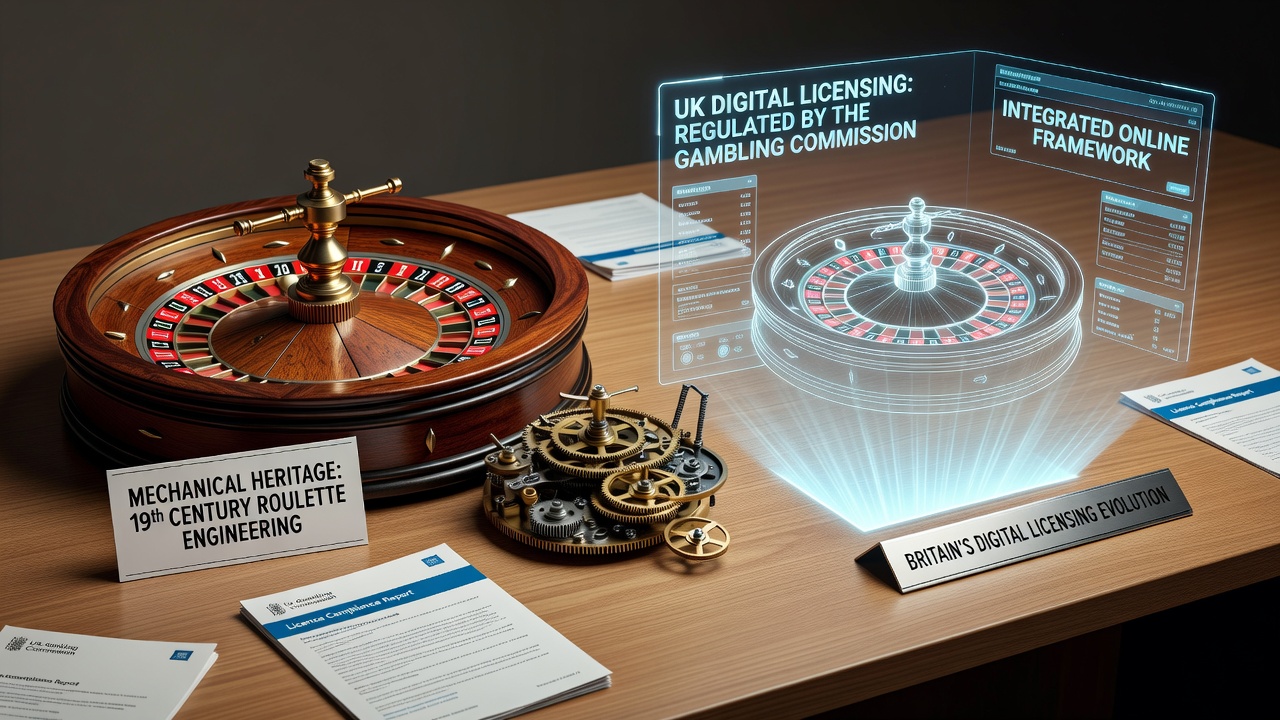
What's interesting is how Britain's licensing process integrates evidence from multiple jurisdictions. Reports published by the Australian Gambling Research Centre on physical wheel performance have been cited in British digital approval documentation alongside findings from the European Gaming Institute. This cross-referencing ensures that software versions preserve the statistical integrity first measured through brass and wood prototypes.
Technicians involved in certification testing often reference original wheel blueprints when calibrating virtual environments. The process involves running thousands of simulated spins to confirm that results align with historical mechanical data sets collected before electronic systems existed. Britain's framework emphasizes this continuity, requiring applicants to provide side-by-side comparisons of physical and digital performance metrics.
September 2026 updates and ongoing verification
Scheduled enhancements to Britain's digital licensing criteria in September 2026 introduce expanded requirements for historical fidelity documentation. These changes direct developers to include references to specific mechanical patents from the Victorian era when submitting new roulette variants. Verification teams will then cross-check simulation outputs against preserved physical examples held in museum collections and private archives.
Industry organizations have compiled databases linking each licensed digital product to its mechanical lineage, allowing regulators to trace design decisions back to original wheel specifications. This approach maintains consistency across generations of gaming equipment while accommodating technological advancement in graphics rendering and mobile delivery platforms.
Conclusion
Britain's digital licensing framework functions as a direct extension of mechanical roulette heritage, translating physical engineering standards into verifiable software requirements. Through documented testing procedures, cross-jurisdictional research references, and the upcoming September 2026 guideline revisions, the system preserves the essential characteristics first established in 18th- and 19th-century wheel construction. Licensing documentation consistently demonstrates that contemporary digital implementations remain anchored in the same principles of balance, randomness, and outcome distribution that governed early mechanical devices.